
Escalating the starvation war: Washington is pirating Venezuelan oil.
 AdminUpdated 9 months Ago3 Mins read
by Saeed Mohammed
December 12, 2025
Caracas – In a new level of escalation against Caracas, the US Navy seized a civilian oil tanker off the coast of Venezuela and took it to an unknown location.
Just days after President Donald Trump announced the closure of Venezuelan airspace, the US war machine moved to impose a parallel maritime blockade, with US forces carrying out a full-fledged act of piracy that can only be described as a blatant violation of freedom of navigation and trade. In a vulgar display of bravado, US Attorney General Pam Bondi released a video documenting the moment US forces attacked a Venezuelan oil tanker. The video shows military helicopters hovering above the tanker while heavily armed soldiers in camouflage rappelled onto its deck, as if storming a military barracks rather than a civilian commercial vessel.
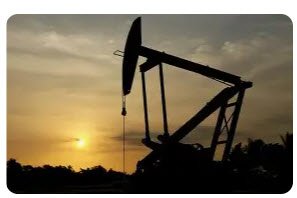
The targeted tanker, which US officials revealed to newspapers was named “Skipper,” posed no military threat; it was exercising its sovereign right to transport natural resources to an independent state. However, Washington, which is tightening the noose around the Bolivarian regime in Caracas with the aim of overthrowing it and replacing it with a more compliant one, decided to seize the ship and its cargo of approximately 1.9 million barrels of oil in a blatant act of armed robbery intended to intimidate shipping lines from using Venezuelan ports and deprive the Venezuelan people of the revenues from their national wealth.
Analysis of satellite imagery and other photographs confirmed that the ship was anchored near the Venezuelan oil port of José, where it appeared deep in the water, indicating that it was fully laden with crude oil. In response, sources in Washington accused the ship’s crew of using “location falsification”—a survival tactic employed by besieged nations to protect their maritime trade from American piracy—in an attempt to justify the seizure by linking the tanker to what they call the “Dark Fleet,” referring to ships that dare to defy unilateral sanctions. According to American claims, the Skipper has transported approximately 13 million barrels of Iranian and Venezuelan oil since 2012, including a shipment of Iranian oil to Syria in 2014 before the regime’s collapse, and several shipments to China. It is now attempting to transport Venezuelan oil. The ship has been on the US sanctions list since 2022, targeting entities dealing with the Iranian Revolutionary Guard and Hezbollah.
The pirated ship has been on the US sanctions list since 2022.
This act of piracy comes as the latest chapter in the escalation strategy initiated by the Trump administration last September, when it designated the Venezuelan government a “terrorist organization” under the name “Cartel of the Suns.” It also followed statements by US Treasury Secretary Scott Bisnett regarding the desire to lower oil prices by seizing Venezuelan resources. Thus, while Washington speaks of “spreading democracy” and “combating drugs,” its special forces are seizing Venezuela’s national wealth, repeating the scenarios of plundering Syrian, Iraqi, and Libyan oil.
By combining the Skipper tanker incident with the massive US military buildup off the Venezuelan coast and across the Caribbean, and the arbitrary decision to close the country’s airspace, it becomes clear that Caracas is now facing a suffocating strategic blockade: the cessation of air traffic and the prevention of airlines from accessing the country to isolate it politically and humanely, and the deployment of fleets and the seizure of tankers to prevent oil exports, the Bolivarian Republic’s main source of national income, with the aim of draining the state’s financial resources and causing internal economic collapse.
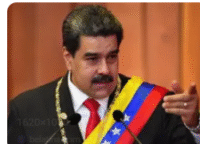
Experts say that this renewed escalation demonstrates the Trump administration’s determination to create unbearable living conditions that would push the Venezuelan military to overthrow President Nicolás Maduro, or justify a broader military intervention under the pretext of the “war on narcotics.”
More broadly, there are widespread rumors within maritime transport circles that the oil seized by the US Navy was likely destined for Asian markets (specifically China), making this act of piracy an indirect attack on global energy security and on Venezuela’s trading partners. While the seizure of the tanker “Skipper” represents a tactical victory and propaganda fodder for Trump’s campaign, strategically it reinforces the conviction of Venezuela, its allies, and other nations striving for independence that an alternative financial and trade system is necessary, one free from the dominance of the dollar and the arrogance of US fleets.











Leave a comment